How much does a concrete patio cost in Grand Prairie?
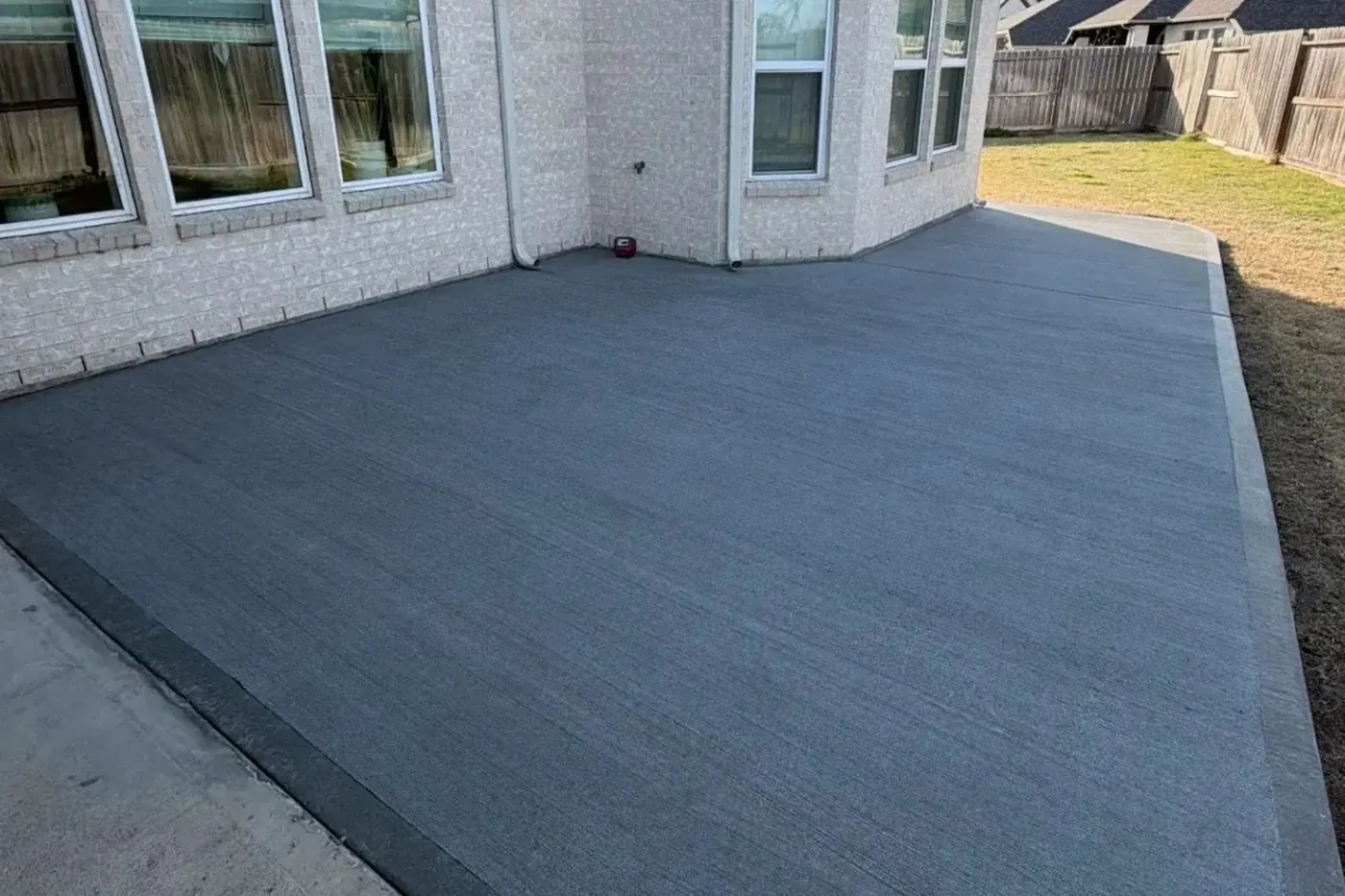
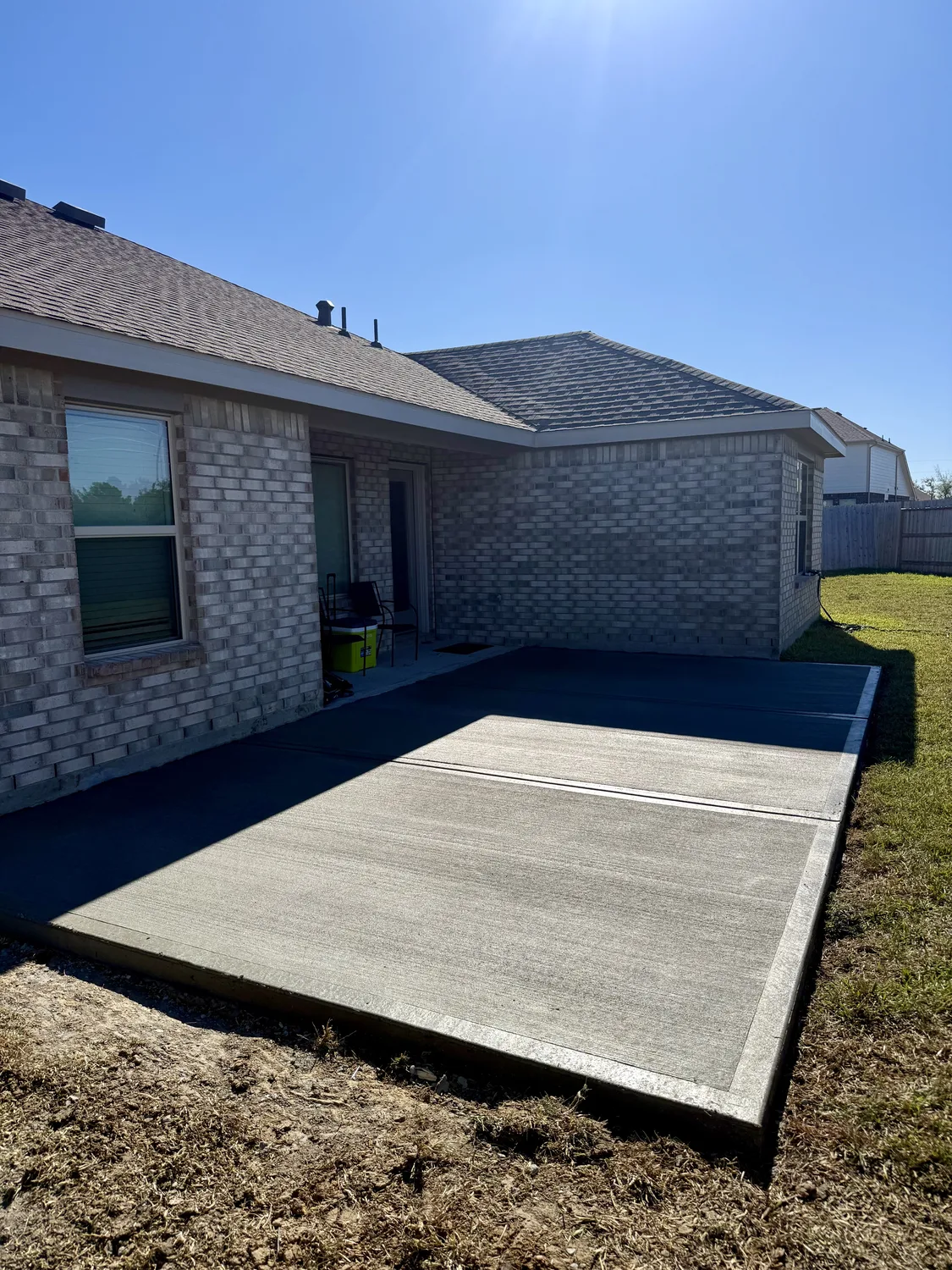
Concrete in North Texas comes with genuine cost drivers: preparing the base over expansive Blackland clay, steel to absorb shrink-swell, and a cure that has to beat the summer evaporation. As an honest starting range, most broom-finish patios around Grand Prairie run about $8 to $14 per square foot, and stamped or decorative work about $14 to $22, before base prep. Past that, the figure depends on square footage, finish, and what the soil demands underneath. We set the number after walking the space, and we will not toss out a low one over the phone that we can't stand behind.
How thick should a concrete patio be?
A residential patio goes on a 4-inch slab, which carries furniture and foot traffic without trouble, and we build it thicker where something heavier such as a hot tub will sit.
Will Grand Prairie clay soil crack my patio?
Blackland clay is the main reason patios move across this corridor. It expands after a wet stretch and pulls back tight in a drought, so we get out front of it at the base: excavate, moisture-condition, compact a steady subgrade, send drainage clear of the edges, then saw control joints so any movement tracks a seam we picked. We won't pretend concrete never moves; what we manage is where the movement ends up.
Can you tie a patio into an outdoor kitchen or fire feature?
Yes. We plan the slab around where a grill island, fire pit, or seating wall will land, thickening and reinforcing under the heavier elements and routing the joints so they don't cut awkwardly through the finished space. Tell us the layout and we pour the patio to suit it.
Stamped or broom finish, which should I pick?
Broom is the everyday answer: textured, sure-footed when wet, and friendlier on the budget. Stamped gives you the look of stone or slate, but the Texas sun leans on the color, so it wants resealing on a schedule to stay deep. We will line both up against how you actually plan to use the yard.
Will a concrete patio drain properly?
Yes. We pitch the slab so rain heads off toward the yard rather than standing on the surface. Water that lingers along the concrete keeps the clay swelling unevenly, and that one-sided pressure is what works a slab loose as the seasons stack up.